US schools cut cafeteria waste through composting and shared food
Summarised from 2 outlets · Updated 6 Nov, 14:36 · Archive
American schools are reducing cafeteria food waste through composting, shared refrigerators and feeding scraps to chickens.
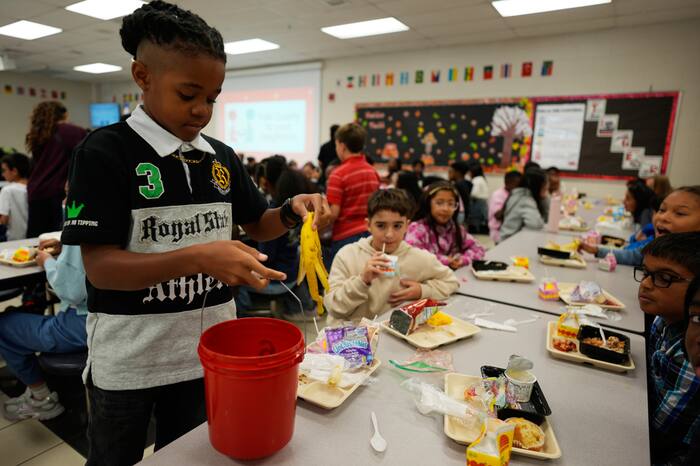
US schools are tackling cafeteria food waste through composting, shared food tables and other strategies. Public schools serve more than 30 million lunches daily, yet experts say tons of food is wasted each year, costing schools and contributing to methane in landfills.
Lovin Elementary School in Lawrenceville, Georgia, 40 miles east of Atlanta, demonstrates several approaches. Students collect leftover lunch scraps in buckets, which head to the school's outdoor compost bin. Unopened milk goes into a shared refrigerator for students to grab as snacks or take home. Uneaten salad scraps are fed to the school's chicken coop. Student Aissatou Brown said the measures mean 'there's not a lot going to the landfill' and 'it feels like we're saving the planet'.
Carmmen Byker Shanks, director of scientific strategy at the Center for Nutrition and Health Impact, said solutions are often straightforward: picking more appetising menu options like better chicken nuggets, or using clear trash bags to make waste more visible. She noted that the causes of food waste vary between schools, so tailored approaches work best.
How it is being reported
- Buckets, chickens and worms: Schools reduce cafeteria food waste through compost, shared tablesSchools are often a hub for food waste: Parts of lunches brought from home don’t get eaten, or perhaps the cafeteria menu isn’t all that appetizing.Clickorlando · 6 Nov, 14:01
- Buckets, chickens and worms: Schools reduce cafeteria food waste through compost, shared tablesSchools are often a hub for food waste: Parts of lunches brought from home don’t get eaten, or perhaps the cafeteria menu isn’t all that appetizing.News4Jax · 6 Nov, 14:01
In this story: Lovin Elementary School · Lawrenceville · Georgia · Atlanta · Aissatou Brown · Carmen Byker Shanks · Center for Nutrition and Health Impact
This summary was written by AI from the headlines and standfirsts above, and states as fact only what at least two outlets report. How we use AI · Report a problem · Corrections log
Comments (0)