Hera probe reveals DART impact crater on asteroid Dimorphos
Summarised from 2 outlets · Updated 25 Nov, 20:13 · Archive
ESA's Hera spacecraft has captured images showing NASA's DART mission created a crater the size of a sports stadium on the asteroid Dimorphos.
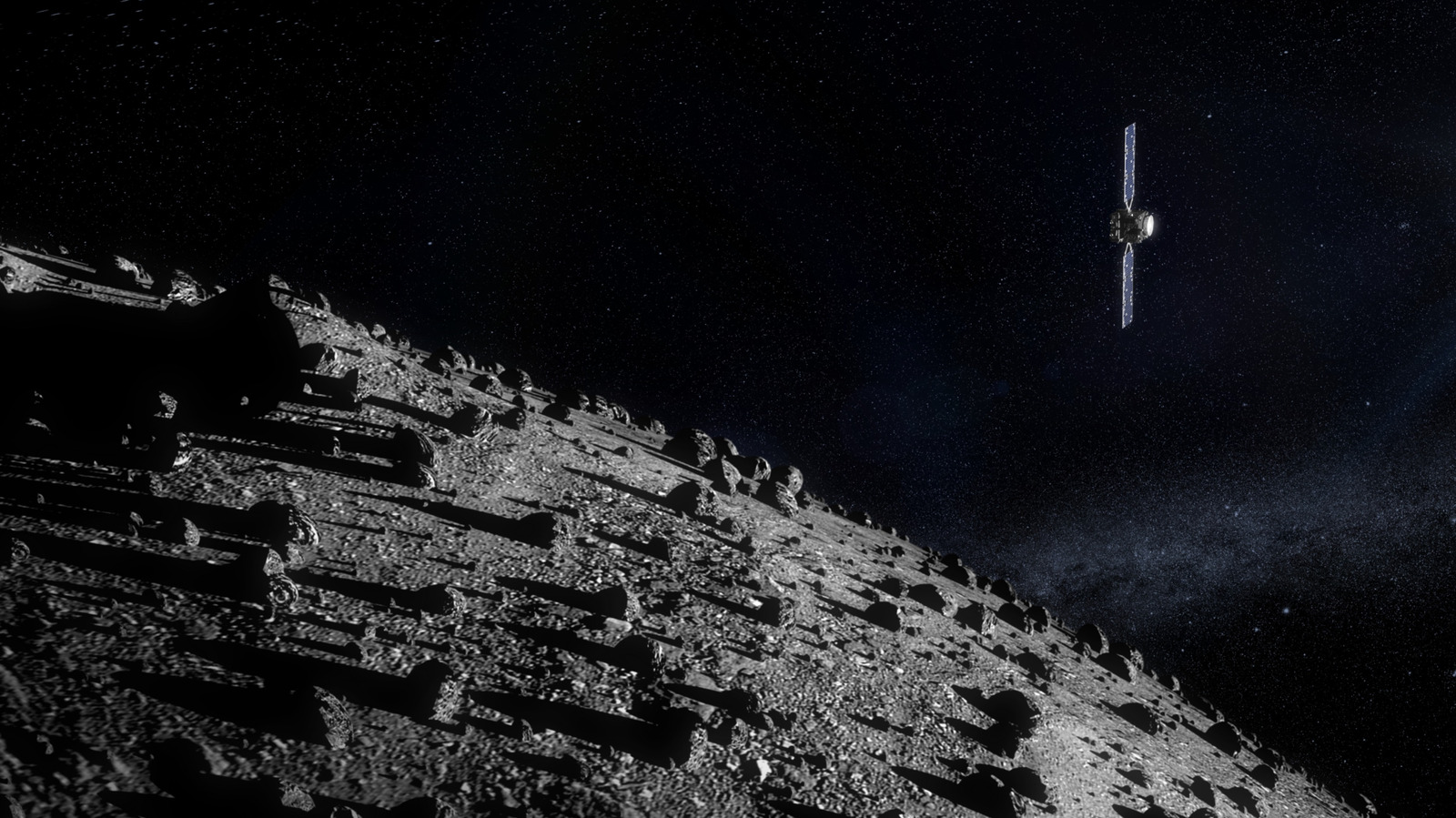
The ESA's Hera spacecraft has captured images showing the aftermath of NASA's DART mission impact on the asteroid Dimorphos. In 2022, NASA's Double Asteroid Redirection Test deliberately crashed a spacecraft into Dimorphos, the smaller of a pair of orbiting asteroids, to test whether such a collision could alter an asteroid's orbital path. Hera's monochrome Asteroid Framing Camera and other instruments, operating from 25 to 30 kilometres away, have now revealed the scale of the destruction.
The controlled impact created a crater the size of a sports stadium that extends across the entire width of Dimorphos, according to Patrick Michel, the principal investigator for Hera at France's National Centre for Scientific Research. The crater did not alter the fields of boulders covering the rest of the asteroid's surface. Hera also found that the impact sent Dimorphos tumbling in its new orbit, and detected hundreds of orbiting boulders surrounding both Dimorphos and its parent asteroid Didymos.
The mission demonstrates that humanity can deliberately alter an asteroid's course. Ian Carnelli, Hera's mission manager, said the combination of DART and Hera represents 'a decisive step towards making asteroid deflection a reliable tool for protecting our planet'. The ESA plans to move Hera closer to the asteroids in December to capture higher-resolution images.
How it is being reported
- NASA's DART mission left a stadium-sized crater in an asteroid, the ESA findsThe ESA's Hera mission has begun capturing images of the aftermath of DART's impact.Engadget · 25 Nov, 20:01
- Hera probe finds DART left a stadium-sized dent in asteroid DimorphosNext step is to move in for a closer look at the carnageThe Register · 25 Nov, 17:30
In this story: ESA · NASA · DART · Hera · Dimorphos · Didymos · Patrick Michel · CNRS
This summary was written by AI from the headlines and standfirsts above, and states as fact only what at least two outlets report. How we use AI · Report a problem · Corrections log
Comments (0)