European and Japanese spacecraft enter orbit around Mercury
Summarised from 2 outlets · Updated 22 Nov, 02:01 · Archive
A European-Japanese spacecraft pair has entered orbit around Mercury after an eight-year journey through the inner solar system.
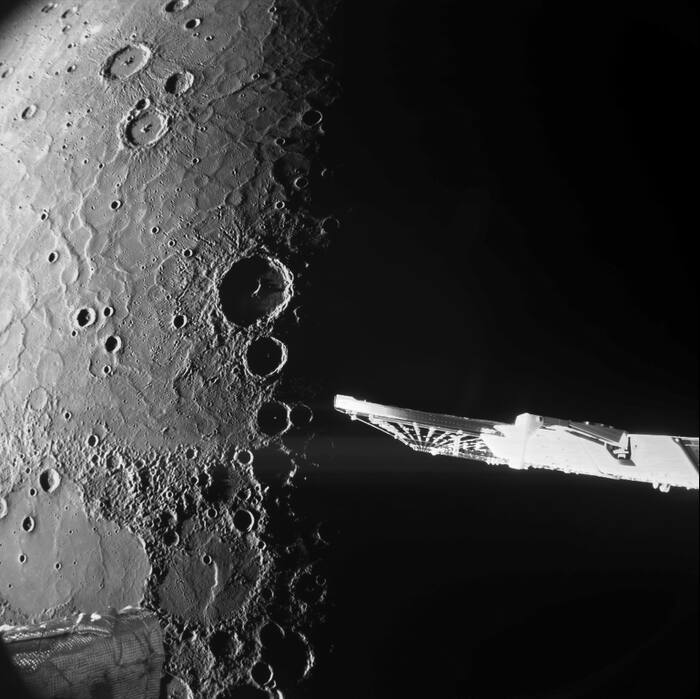
A pair of spacecraft slipped into orbit around Mercury on Saturday after an eight-year cruise through the inner solar system. The linked robotic explorers—one European, the other Japanese—will separate from one another next month to map and study the scorching planet from different altitudes. The $2 billion mission is known as BepiColombo.
A series of thruster firings slowed the spacecraft enough to be captured by Mercury's weak gravity. Flight controllers in Germany, located 94 million miles away, took several anxious hours to confirm that BepiColombo had achieved orbit as they pored over incoming data.
BepiColombo is only the third spacecraft to visit Mercury, the sun's closest planet and barely bigger than the moon, and the first in more than a decade. NASA's Mariner 10 flew past Mercury three times in the mid-1970s. NASA's Messenger spacecraft entered orbit around Mercury in 2011 and crashed into the planet in 2015 after running out of fuel. Launched in 2018, BepiColombo took a slower route to reach Mercury, flying past Earth once, Venus twice and Mercury six times for gravity-assisting manoeuvres, covering more than 6 billion miles in the process.
How it is being reported
- Little Mercury gets its first visitor in years as a pair of spacecraft loop into orbitA pair of spacecraft have slipped into orbit around Mercury after an eight-year cruise through the inner solar system.Clickorlando · 22 Nov, 01:18
- Little Mercury gets its first visitor in years as a pair of spacecraft loop into orbitA pair of spacecraft have slipped into orbit around Mercury after an eight-year cruise through the inner solar system.News4Jax · 22 Nov, 01:18
In this story: BepiColombo · European Space Agency · Mercury · NASA · Germany
This summary was written by AI from the headlines and standfirsts above, and states as fact only what at least two outlets report. How we use AI · Report a problem · Corrections log
Comments (0)