New long-clawed dinosaur species discovered from Isle of Wight fossil
Summarised from 2 outlets · Updated 14 Oct, 03:08 · Archive
Scientists have identified a previously unknown predatory dinosaur species that lived in Britain 120 million years ago.
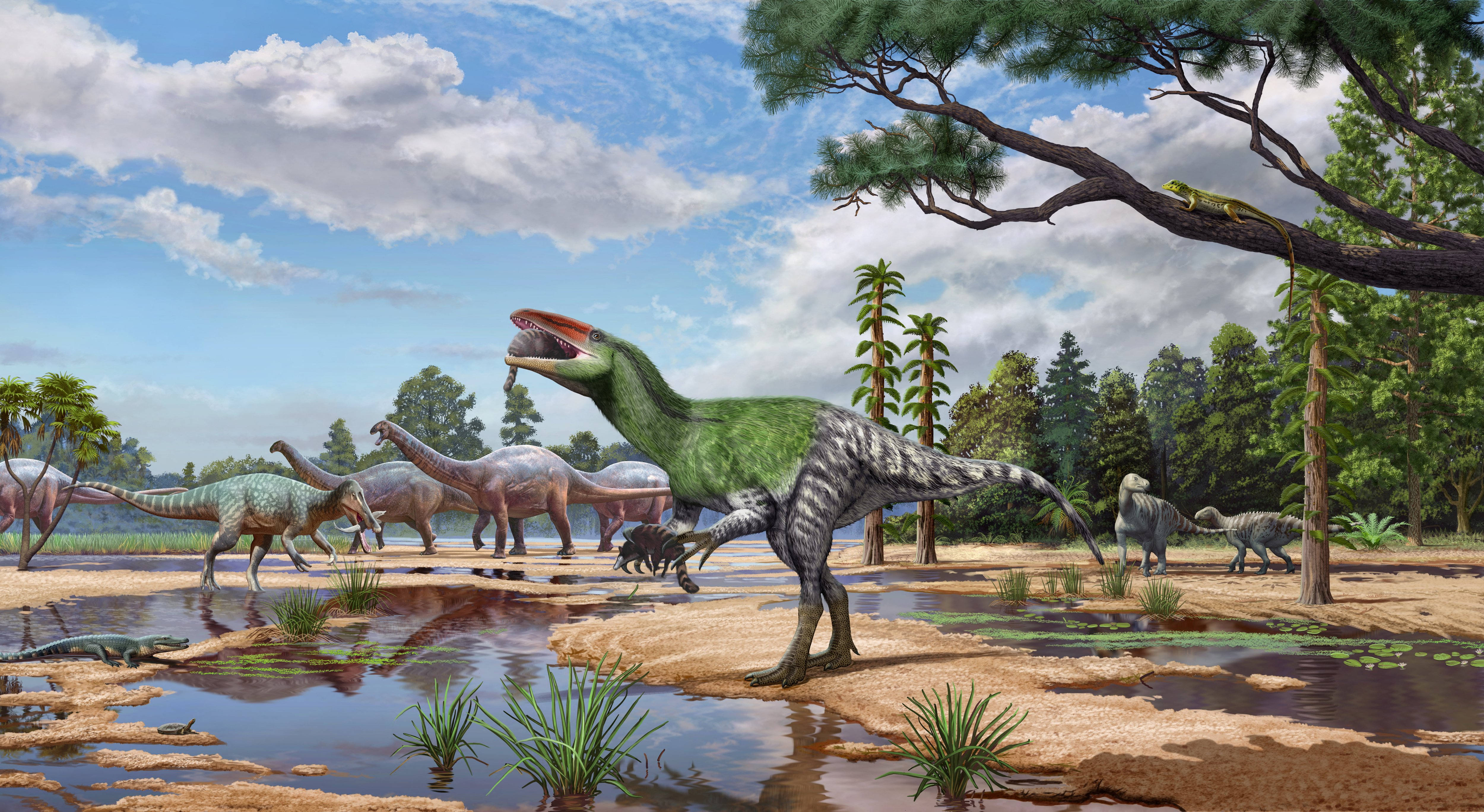
A skull fossil discovered on the Isle of Wight has revealed a previously unknown dinosaur species named Invictibellatrix amberina. The fossil was acquired by the Natural History Museum in 1924 but went unnoticed for nearly 100 years, sitting in a drawer before its significance was established.
The tiger-sized predator lived in Britain 120 million years ago and belonged to a group of megaraptors—agile, two-legged meat-eating dinosaurs closely related to tyrannosaurs. It measured between three and four metres long and stood just over 1.5 metres tall. This is the first evidence that the group, thought to have originated in Asia, once lived in Europe.
Dr Cassius Morrison of University College London, who led the research, said the dinosaur would have been more dangerous to humans than a Tyrannosaurus rex, as people would have been perfectly-sized prey at about a third of the creature's body weight.
How it is being reported
- New species of dinosaur discovered from fossil 'overlooked' in Natural History Museum drawer for over 100 yearsA new dinosaur species has been discovered from a fossil that had sat in a drawer at the Natural History Museum for over a century. The creature, formally named Invictibellatrix amberina, represents the first megaraptoran, a group of two-legged predators renowned for their enormous claws, ever identified in Europe, according to a University College London-led research team. Their findings, published in the journal Royal Society Open Science, were based on a partial braincase discovered on the Isle of Wight that entered the museum's collection in 1924. "It was left in one of the collection's…GB News · 14 Oct, 04:16
- New dinosaur species which preyed on humans discovered from Isle of Wight fossil 'overlooked' for 100 yearsScientists have identified a previously unknown long-clawed predator that roamed Britain 120 million years ago - and say humans would have been the perfect size for it to huntThe Mirror · 14 Oct, 00:11
In this story: Invictibellatrix amberina · Isle of Wight · Natural History Museum · University College London · Dr Cassius Morrison
This summary was written by AI from the headlines and standfirsts above, and states as fact only what at least two outlets report. How we use AI · Report a problem
Comments (0)