Scientists discover record-breaking quasar from early universe
Summarised from 2 outlets · Updated 24 Nov, 08:32 · Archive
Scientists have discovered the most distant quasar yet, formed within 630 million years of the Big Bang.
Scientists have discovered the most distant quasar yet, the core of a galaxy with a black hole at its centre, formed within 630 million years of the Big Bang. The discovery was reported Tuesday by a German-led team and represents a record-breaking find in early-universe observations.
The quasar is considered a very early development in the universe's 13.8 billion-year history. The previous two records each took observations back by about 15 million years or less, but this discovery extends back nearly 40 million years further, marking the biggest advance in nearly a decade, according to Julien Wolf of the European Southern Observatory, who led the study. What makes this quasar particularly rare, Wolf noted, is the massive size of its black hole despite the black hole being a relatively slow consumer of surrounding matter.
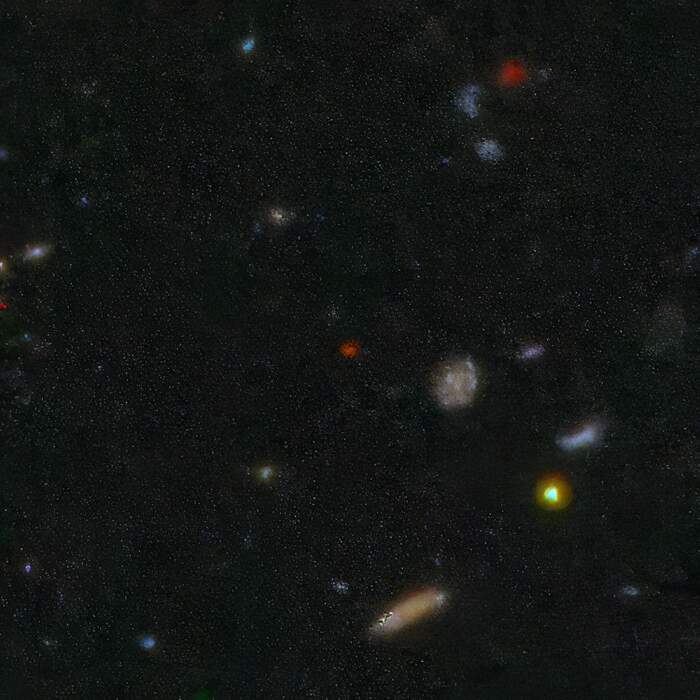
Wolf's team discovered the quasar while examining millions of observations from the European Space Agency's Euclid telescope, launched in 2023. The telescope is surveying galaxies to shed light on dark matter and dark energy. Scientists are observing the quasar as it was 13.1 billion years ago, when the universe was less than 5 per cent of its current age. Wolf named the quasar Dun Aonghasa after a prehistoric stone fort in Ireland's Aran Islands.
How it is being reported
- Scientists discover quasar formed within a mere 630 million years of the Big Bang, setting a recordScientists have discovered the most distant quasar yet.News4Jax · 24 Nov, 08:00
- Scientists discover quasar formed within a mere 630 million years of the Big Bang, setting a recordScientists have discovered the most distant quasar yet.Clickorlando · 24 Nov, 08:00
In this story: Julien Wolf · European Southern Observatory · European Space Agency · Aran Islands
This summary was written by AI from the headlines and standfirsts above, and states as fact only what at least two outlets report. How we use AI · Report a problem · Corrections log
Comments (0)