Colorado glaciers thin dramatically in record warm 2026
Summarised from 2 outlets · Updated 27 Oct, 13:32 · Archive
Colorado's glaciers thinned dramatically in 2026 due to record low snow and summer heat.
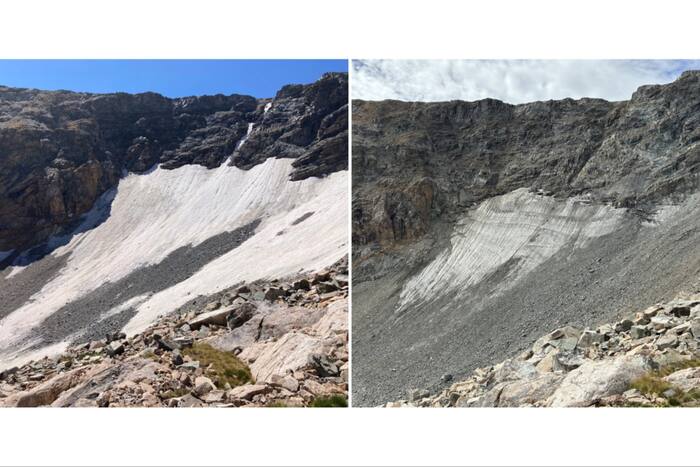
Colorado's major glaciers thinned dramatically in 2026 due to record low mountain snow and record warm temperatures, according to research by glaciologist Dan McGrath at Colorado State University. The combination of the state's worst snowpack on record, followed by record summer heat, left the year-round ice masses in the Rocky Mountains severely exposed.
The Andrews Glacier thinned by more than 12 feet, the Arapaho Glacier lost nearly 10 feet, and the Isabelle Glacier lost about 6.5 feet. This represents a doubling of their thinning rate from the prior five years, when thinning measured a foot or less per year. St. Mary's Glacier, a perennial snowfield popular with hikers and skiers, melted completely in September.
McGrath said the shrinking is consistent with glacier loss observed across the planet, as warmer temperatures accelerate melting and less snow falls to replenish ice. The changes threaten water sources, increase mountain hazards and contribute to sea level rise. McGrath noted the loss extends beyond Colorado, occurring in the Alps, other western U.S. mountain ranges and globally.
How it is being reported
- Colorado's glaciers thinned dramatically due to record low snow and heat in 2026The most prominent glaciers in Colorado thinned dramatically over the past year due to record low mountain snow and record warm temperatures.Clickorlando · 27 Oct, 13:01
- Colorado's glaciers thinned dramatically due to record low snow and heat in 2026The most prominent glaciers in Colorado thinned dramatically over the past year due to record low mountain snow and record warm temperatures.News4Jax · 27 Oct, 13:01
In this story: Colorado · Rocky Mountains · Dan McGrath · Colorado State University · Andrews Glacier · Arapaho Glacier · Isabelle Glacier · St. Mary's Glacier
This summary was written by AI from the headlines and standfirsts above, and states as fact only what at least two outlets report. How we use AI · Report a problem
Comments (0)