Microsoft announces Maia 300 AI chip to reduce Nvidia reliance
Summarised from 2 outlets · Updated 12 Oct, 14:19 · Archive
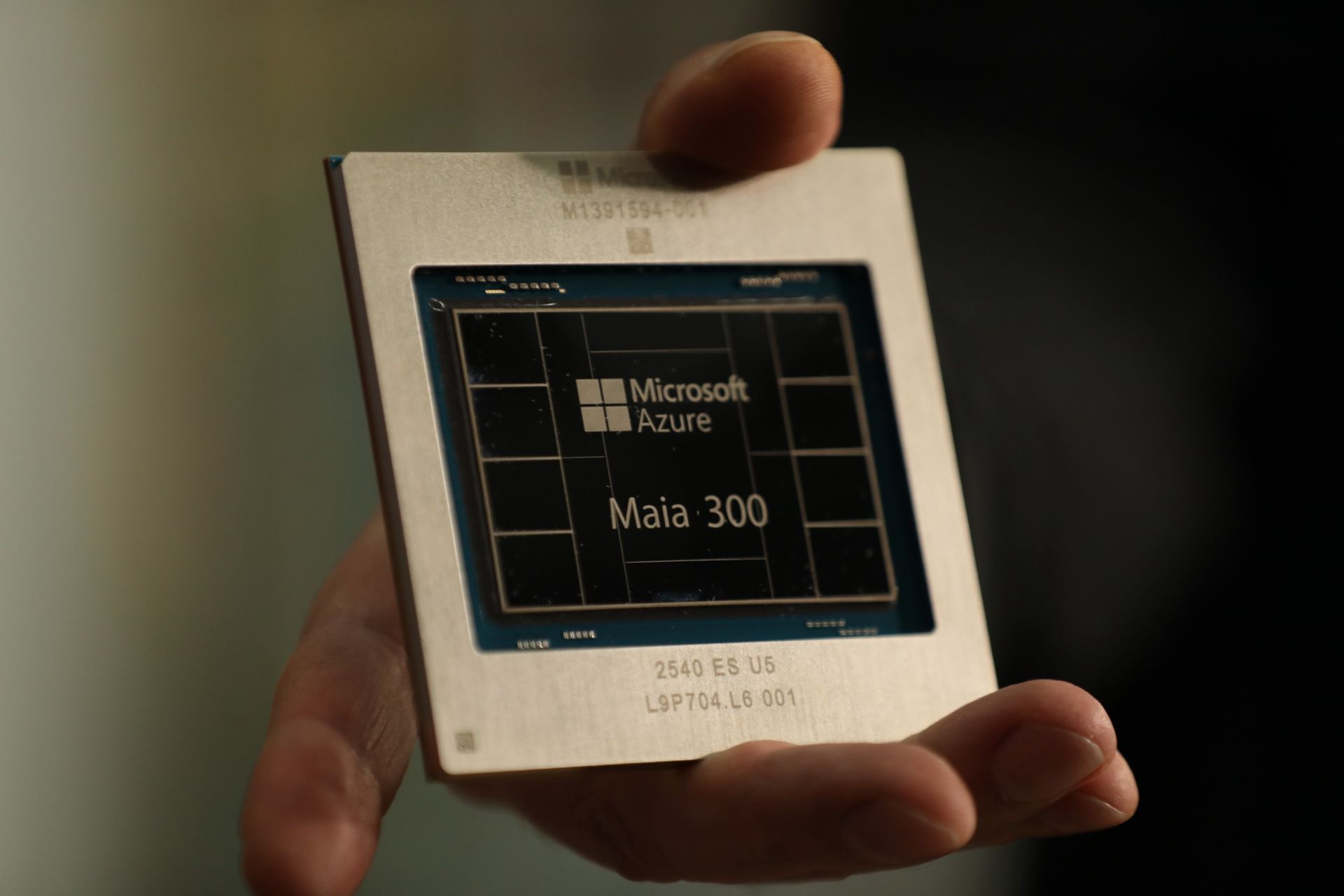
Microsoft has announced Maia 300, its third-generation in-house AI chip, designed to be the primary inference system for Microsoft's cloud services and products. The company says it will deliver 40 per cent more tokens per megawatt compared to leading GPU-based systems. A full 96-accelerator configuration will deliver up to seven times the rack-scale token throughput of its predecessor, Maia 200.
Maia 300 is built on TSMC's N2P process node using a multi-chiplet architecture that separates compute, memory-controller and input-output functions. The chip features eight stacks of HBM4 memory with a claimed peak bandwidth of 18TB/s within a 950W thermal design power. The design targets long-context reasoning, latency-sensitive conversational AI and multi-step agentic tasks.
Production deployment of Maia 300 begins in 2027. Microsoft says this will allow the company to scale its Azure Maia family to multi-gigawatt deployments and make Maia the primary AI inference system for Microsoft products and services. Maia 200, announced only in January, is already running on production AI workloads across Microsoft, including Copilot, GitHub Copilot and Microsoft Foundry. The efficiency improvements from Maia 300 are expected to reduce Microsoft's reliance on chips from Nvidia and AMD.
How it is being reported
- Microsoft’s new AI chip makes it less reliant on Nvidia’s GPUsMicrosoft is announcing its third-generation Maia in-house AI chip today, designed to be the "primary AI inference system" for Microsoft's products and services. Maia 300 not only improves the cost and efficiency of running AI workloads in the cloud, it's also more capable of handling the latest reasoning models and agentic tasks. Maia 300 will […]The Verge · 12 Oct, 14:00
- Microsoft unveils Maia 300, its most powerful AI chip yet - and it might make using Teams, Copilot and Cowork much better at lastMaia 300 is designed for the next generation of AI workloads, offering greater efficiency and power.TechRadar · 12 Oct, 14:00
In this story: Microsoft · Nvidia · AMD · TSMC · GitHub
This summary was written by AI from the headlines and standfirsts above, and states as fact only what at least two outlets report. How we use AI · Report a problem
Comments (0)