NASA's Swift Observatory Set to Fall to Earth This Week
Summarised from 3 outlets · Updated 3 Nov, 13:12 · Archive
NASA's Swift space observatory, launched in 2004, is expected to reenter Earth's atmosphere on November 4 after a failed rescue mission.
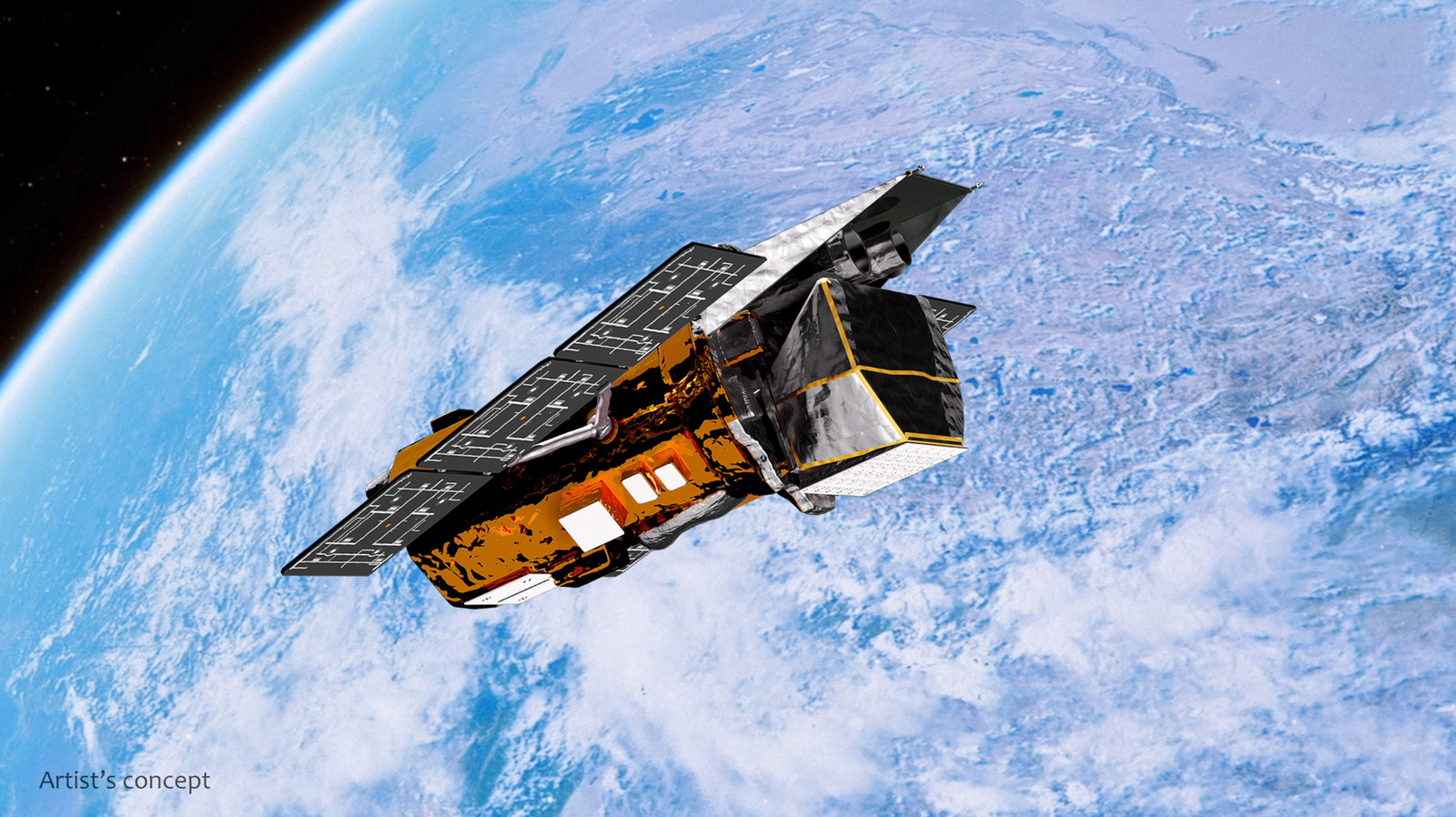
NASA's Swift Observatory, a space observatory that has operated for 22 years, is expected to reenter Earth's atmosphere on 4 November. The 3,200-pound satellite is predicted to reenter around 3:30 AM Eastern time, though the US Armed Forces estimates an uncertainty of eleven hours either side. The possible impact zone covers parts of Africa, Australia, Southeast Asia and South America. NASA says most of Swift will burn up in the atmosphere, but some components might survive and reach the ground.
Swift was launched on 20 November 2004 and far exceeded its expected lifespan of a few years. It was equipped with three telescopes designed to detect and study gamma-ray bursts, the most energetic explosions in the universe. The observatory located these events and transmitted their positions to observatories around the world. Over its operational life, Swift observed more than 2,000 gamma-ray bursts and gathered data on 1,400 supernova explosions, asteroids, comets, and stars shredded by black holes.
In 2024, increased solar activity heated and expanded Earth's upper atmosphere, increasing drag on the satellite and accelerating its descent. Without a propulsion system capable of correcting its orbit, Swift's operational future was imperilled. In July 2026, NASA launched a $30 million rescue mission using a robotic spacecraft called LINK, which was supposed to drag Swift 150 miles higher and extend its operational life. However, LINK experienced attitude control problems that prevented it from maintaining proper orientation in space, causing it to spin and lose communication. NASA cancelled the mission and ended Swift's operations in late October.
How it is being reported
- A truck-sized NASA space telescope is about to crash to EarthAlmost 22 years after it was launched, NASA's Swift Observatory is now about to fall back to Earth on Wednesday after attempts to push it back into a higher orbit failed. NASA announced that the aging space telescope is anticipated to re-enter Earth's atmosphere at approximately 3:30AM ET (give or take 11 hours), and that […]The Verge · 3 Nov, 14:17
- NASA's Swift observatory is expected to re-enter Earth on November 4The US Armed Forces says NASA's Swift observatory will re-enter Earth's atmosphere in the early hours of November 4.Engadget · 3 Nov, 12:41
- NASA’s Swift Observatory Is Falling to Earth. Here’s What to Know About the Impending ImpactThe 3,200-pound satellite is expected to reenter Earth’s atmosphere later this week with a wide reentry zone covering parts of Africa, Australia, Southeast Asia, and South America.Wired · 3 Nov, 10:45
In this story: NASA · Swift Observatory · Earth · Africa · Australia · Southeast Asia · South America · Jared Isaacman
This summary was written by AI from the headlines and standfirsts above, and states as fact only what at least two outlets report. How we use AI · Report a problem · Corrections log
Comments (0)