Scientists recreate optical secrets of ancient Roman glass
Summarised from 2 outlets · Updated 25 Oct, 13:43 · Archive
University of Sheffield researchers have replicated the colour-changing properties of the 1,600-year-old Lycurgus Cup.
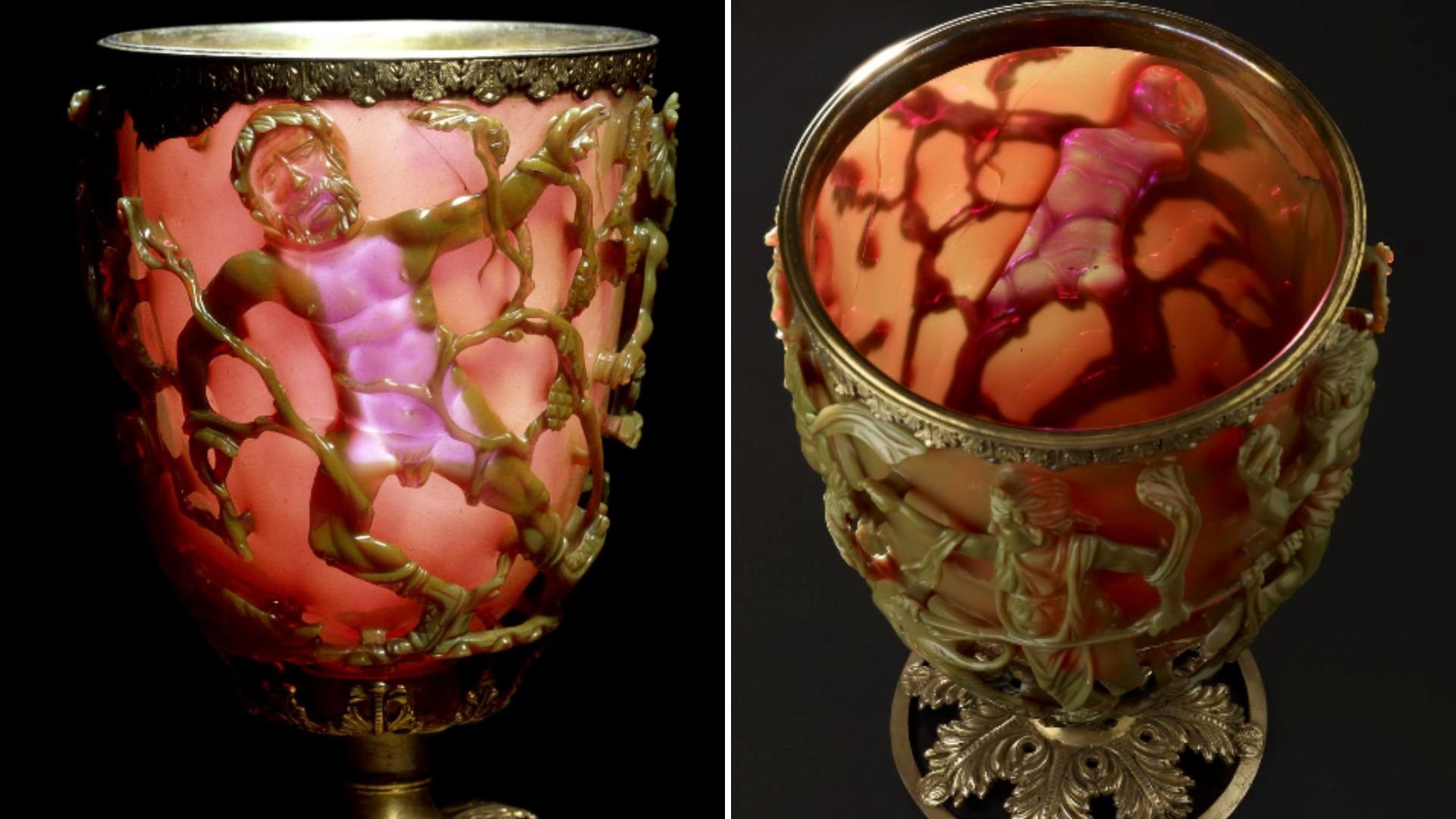
Scientists at the University of Sheffield have successfully replicated the colour-changing properties of the Lycurgus Cup, a 1,600-year-old Roman glass masterpiece housed in the British Museum. The cup transforms from jade green under standard lighting to ruby red when light is positioned behind it, an optical effect known as dichroic that has confounded experts for centuries.
The researchers achieved this remarkable feat by embedding nanoparticles of gold and silver into molten glass, each particle around a thousand times smaller than a grain of sand. They used an ancient recipe derived from a fragment of the Roman original. As the thick molten glass cooled from above 1,000 degrees Celsius, gold and silver nanocrystals grew around particles within it, creating the colour-shifting effect.
Dr Lisa Hollands, a technician at the University of Sheffield's School of Chemical, Materials and Biological Engineering, led the work alongside Professor Caroline Jackson, a leading Roman glass expert. Hollands described the project as 'a labour of love', noting that 'people have tried it before with limited success' and calling the breakthrough 'magic'. The original fourth-century cup features a mythological frieze carved in deep relief, depicting the god of wine Dionysus triumphing over King Lycurgus from Homer's Iliad. In 2022, it was recognised as one of the seven glass wonders of the world by an international panel.
How it is being reported
- Archaeology breakthrough as scientists uncover secrets behind wondrous Roman creationResearchers at the University of Sheffield have managed to recreate the extraordinary colour-shifting properties of the Lycurgus Cup, a 1,600-year-old Roman glass masterpiece housed in the British Museum. The remarkable feat, which involved embedding tiny particles of gold and silver into glass, reproduces a so-called dichroic effect that has puzzled historians and glass-makers alike for centuries. The cup transforms from jade green under standard lighting to a deep ruby red when illuminated from behind, with Dr Lisa Hollands, a technician in Sheffield's School of Chemical, Materials and…GB News · 25 Oct, 13:34
- ‘It’s magic’: scientists rediscover how to make ancient Roman colour-changing glassExclusive: Optical engineering that went into 1,600-year-old Lycurgus Cup has baffled experts for centuries The Romans’ proficiency in the art of glass-making has produced some of the wonders of antiquity, but few of their creations better a 1,600-year-old masterpiece which sits in the British Museum. Depending on where a light source is positioned, the Lycurgus Cup changes colour, from jade green under normal lighting to ruby red when lit from behind – an astonishing feat of optical engineering that has confounded historians and glass-makers for centuries. Continue reading...The Guardian · 25 Oct, 06:00
In this story: Lycurgus Cup · British Museum · University of Sheffield · Dr Lisa Hollands · Professor Caroline Jackson · Dionysus · King Lycurgus
This summary was written by AI from the headlines and standfirsts above, and states as fact only what at least two outlets report. How we use AI · Report a problem
Comments (0)